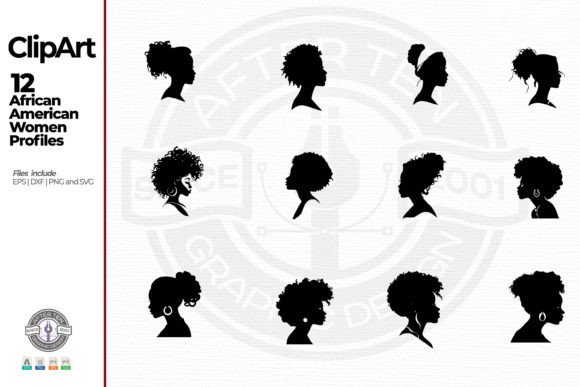
African American Women Profiles: Graphics & Illustrations
As a blog designer who’s built over 80 content-driven websites—and published editorial visuals for newsletters, digital guides, and affiliate campaigns—I opened African American Women Profiles expecting versatility. What I found was something sharper: a cohesive, human-centered graphic design asset that immediately elevated the tone of my next editorial project—a wellness blog rebrand focused on inclusive self-care content.
The first impression? Warm, grounded, and quietly confident. These aren’t stylized caricatures or trend-chasing silhouettes. Each profile carries subtle individuality—distinct hair textures, gentle facial expressions, thoughtful posture—and avoids cliché while honoring cultural specificity. The mood leans professional yet approachable, modern yet timeless, with just enough artistic nuance to feel intentional without sacrificing clarity. It reads as educational and lifestyle-aligned—not decorative filler, but editorial design with purpose. That distinction matters when your readers scroll past dozens of visuals before landing on yours.
In real publishing workflows, African American Women Profiles shines where authenticity meets utility. I used it across six live touchpoints in under one week: as custom Pinterest pins for evergreen mental health articles; as layered accents in Canva templates for downloadable worksheets; as central elements in newsletter headers (paired with bold sans-serif type); as category thumbnails on a resource library page; as hero image overlays for digital guide landing pages; and as refined SVG icons inside an affiliate marketing media kit. In every case, the asset reinforced visual hierarchy—not by shouting, but by anchoring attention with quiet authority.
Why does this work so well for content performance? First, it strengthens first impressions. A blog post titled “5 Mindful Morning Routines for Black Women” gains instant resonance when its featured image centers one of these profiles—not as decoration, but as visual affirmation. Second, it builds reader trust. Consistent use across article headers, social media graphics, and lead magnets signals intentionality, not randomness—key for audiences seeking reliable, identity-affirming content. Third, it sharpens brand identity. When applied thoughtfully, African American Women Profiles becomes part of your site’s visual language: recognizable at thumbnail size, scalable across devices, and adaptable across formats from web design to printable design.
Where does it land strongest? Hero images (especially with soft gradient overlays), article thumbnails (particularly on mobile-optimized blogs), Pinterest pins (the transparent PNGs scale beautifully), editorial accents (like pull-quote borders or section dividers), content upgrades (e.g., branded checklist headers), downloadable resources (worksheets, planners, reflection journals), category visuals (think “Community Care” or “Cultural Wellness”), newsletter headers (SVG ensures crisp rendering), and social media previews (the EPS and SVG files integrate cleanly into Meta and LinkedIn preview tools).
Use with care in contexts where subtlety could dilute impact—or worse, misalign. Avoid tight mobile thumbnails where fine details blur; skip text-heavy blog graphics unless you’ve tested contrast rigorously; steer clear of low-contrast backgrounds (e.g., light gray on pale skin tones) without adding subtle drop shadows or strokes. It’s less suited for ultra-minimalist corporate sites, strictly data-driven finance blogs, or serious legal/medical content where clinical neutrality is required. This is a creative design asset—not a generic clipart replacement—and its strength lies in its specificity.
Here are the publisher notes I jotted down after testing:
- Test responsiveness early: Preview each file type (EPS, SVG, PNG) inside your actual blog layout—not just in isolation. SVG scales perfectly; large PNGs need compression without quality loss.
- Thumbnail check: Resize to 300px wide and view on desktop and mobile. Does the profile remain legible? Does expression hold?
- Typography pairing: Try it beside serif (Georgia), sans-serif (Inter), script (Dancing Script), handwritten (Caveat), and display fonts (Bebas Neue). Note which combinations elevate vs. compete.
- Contrast & readability: Overlay headline text at 24px and 16px. Adjust opacity or add subtle text shadows if needed.
- Monochrome test: Convert to grayscale. Does shape recognition hold? Useful for printables or accessibility-first layouts.
- Licensing verification: Confirm commercial license covers monetized uses—affiliate marketing pages, paid digital products, and ad-supported newsletters all count.
- File size audit: Large transparent PNGs can bloat page speed. Run them through Squoosh or TinyPNG before uploading to WordPress or Ghost.
This isn’t just another digital download from a creative marketplace. African American Women Profiles functions as both illustration and strategic tool—supporting content marketing that resonates, affiliate marketing that converts with integrity, and small business branding that reflects real people, not stock tropes. As a graphic design asset, it bridges aesthetic polish and editorial responsibility. As an illustrations set, it delivers technical flexibility (DXF for laser cutting, EPS for vector editing, SVG for web, PNG for quick drag-and-drop). And as a graphics collection, it rewards thoughtful integration—not just placement.
If your content lives at the intersection of identity, education, and everyday empowerment, this set earns its place in your design assets library. It doesn’t shout for attention—it invites it. And in today’s crowded feed-driven landscape, that kind of quiet confidence is rare, valuable, and deeply effective.