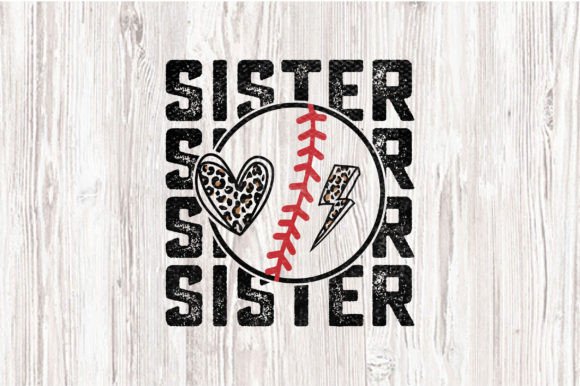
Baseball Sister, T-Ball Distressed PNG
As someone who’s stitched hundreds of custom pieces—from boutique baby onesies to Etsy shop sweatshirts—I opened Baseball Sister, T-Ball Distressed PNG expecting charm with function. What I found was a design that lands right where it should: warm, nostalgic, and quietly confident—not too cutesy, not too rugged—just right for a handmade product that feels personal without trying too hard.
A Design That Feels Like a Memory, Not a Stock Graphic
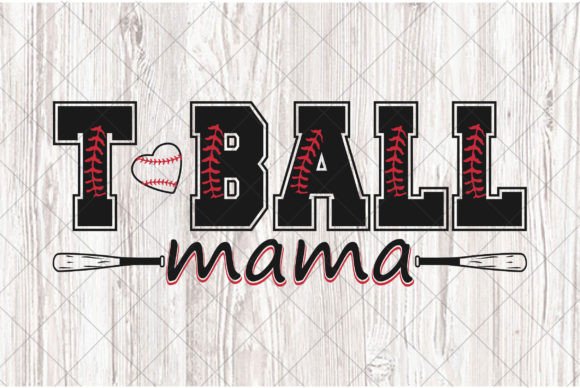
The first thing that struck me wasn’t the baseball motif or the “Sister” text—it was the distressed texture. It’s subtle but intentional: soft grain, slight edge wear, and gentle irregularity in the letterforms. This isn’t just visual noise—it reads as hand-drawn authenticity, which translates beautifully into embroidery. When digitized well, that kind of texture encourages satin stitch variation, lets fill stitches breathe, and avoids the “plastic overlay” effect some overly crisp graphics create on fabric.
I pictured it instantly on a natural cotton tote bag—something for a little league mom at opening day. Not flashy, not corporate, but unmistakably *theirs*. The layout is balanced: the baseball anchors the left, the words curve gently around it, and the distressed treatment unifies both elements. No tiny details scream “stitching disaster”—no micro-dots, no overlapping thin lines, no fragile serifs. That’s huge. It means fewer thread breaks, less rehooping, and more consistent results across machines.
Where It Shines (and Where It Needs Care)
Baseball Sister, T-Ball Distressed PNG works especially well for custom apparel where personality matters more than polish: toddler sweatshirts, dad caps, embroidered patches for team bags, or even kitchen tea towels for a baseball-themed nursery. Its medium scale (roughly 3.5–4.5 inches wide when sized for standard hoops) makes it versatile—not so small it disappears on a blanket, not so large it overwhelms a baby onesie.
It’s also a smart choice for personalized gifts. I recently used a similar distressed-sibling design on a pair of matching pillow covers for a birthday gift—“Big Sister” and “Little Sister,” each with a different sport icon. Customers responded strongly to the warmth and specificity. Baseball Sister, T-Ball Distressed PNG taps into that same emotional resonance: it’s not generic “sibling love”—it’s shared dugout moments, mismatched gloves, and pride in the tiniest player.
That said—don’t rush it onto every surface. On thin or stretchy fabrics like jersey tees or lightweight baby knits, the distressed edges can blur if stabilizer isn’t matched carefully. I’d recommend tear-away + light cut-away combo for those. On dark fabric, test thread contrast early: charcoal gray or navy thread often reads cleaner than black against black, especially in the softer distressed zones. And avoid placing it over seams or curved areas like cap crowns unless you’ve confirmed the file includes underlay or proper push-pull compensation—PNG files don’t carry stitch data, so your digitizer (or software) must handle that.
Real-World Impact on Your Craft Business
If you’re an Etsy seller or run a small shop product line, this design strengthens perceived value. Why? Because it avoids looking like a clipart download. Buyers scroll past dozens of “sister” designs daily—this one stands out by feeling designed for stitching, not just screen display. That builds trust. When your customer sees how cleanly the baseball stitches out—the way the satin stitch wraps the curve, how the fill stitch stays airy in the lettering—they’re more likely to reorder, tag you, or leave a review mentioning “great quality.”
For commercial embroidery, it holds up across applications: as a machine embroidery design on youth hoodies, as part of a layered applique design on denim jackets, or even scaled down for a delicate embroidered patch on a backpack. Just remember—PNG is a starting point. You’ll need to digitize it properly for your project. If you’re using it for digital embroidery file resale, double-check licensing terms before listing it as your own asset. The description says files “can be used but are not limited to the following programs A”—so verify whether commercial redistribution or derivative creation is permitted.
Practical Designer Notes Before You Stitch
- Always test on scrap fabric first—especially with textured weaves like canvas or terry cloth, where distressed edges can catch or fuzz.
- Check stitch density in the baseball stitching. Too dense = puckering on soft fabrics; too sparse = loss of shape. Adjust underlay if needed.
- Confirm hoop size compatibility. This design fits comfortably in a 4x4 hoop—but if you’re scaling it up for a tote or down for a cap, revisit spacing and legibility.
- Inspect small details in the digitized version: are the “T” and “B” in “T-Ball” distinct enough at 2.5 inches? Does the baseball stitching hold its roundness?
- Test in black-and-white mockups—distressed textures can disappear on low-contrast backgrounds. Try it over heather gray, oatmeal, and navy to see where it sings.
- Use proper stabilizer: medium-weight cut-away for stable wovens, lightweight tear-away for knits, and consider topping for terrycloth or fuzzy fleece.
- Review licensing before selling finished items. While personal use is safe, commercial embroidery or digital resale may require explicit permission.
Bottom line? Baseball Sister, T-Ball Distressed PNG isn’t just another T-Shirt Designs graphic. It’s a thoughtful, stitch-ready foundation—one that invites customization, supports brand consistency, and delivers quiet professionalism in every finished product. Whether you’re prepping for a craft fair, building an Etsy collection, or fulfilling a client’s vision for a heartfelt gift, this design earns its place in your design assets library—not because it’s trendy, but because it’s built to last, stitch after careful stitch.